
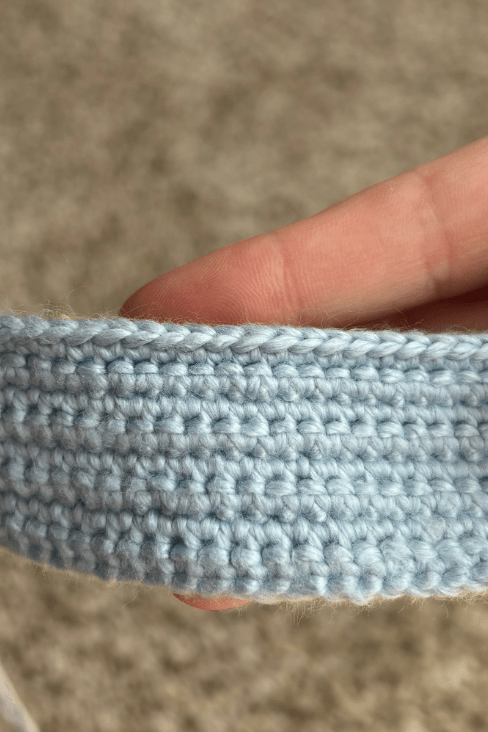
Hey everyone! Today you’re going to learn how all about front loop, back loop, and the anatomy of a crochet stitch in this beginner-friendly guide.
Since I started showing signs of early labor, I didn’t have to finish out my work week–which means I have a lot of free time on my hands right now (not for long, I know). So I thought I’d work on creating some new crochet tutorials for you guys!
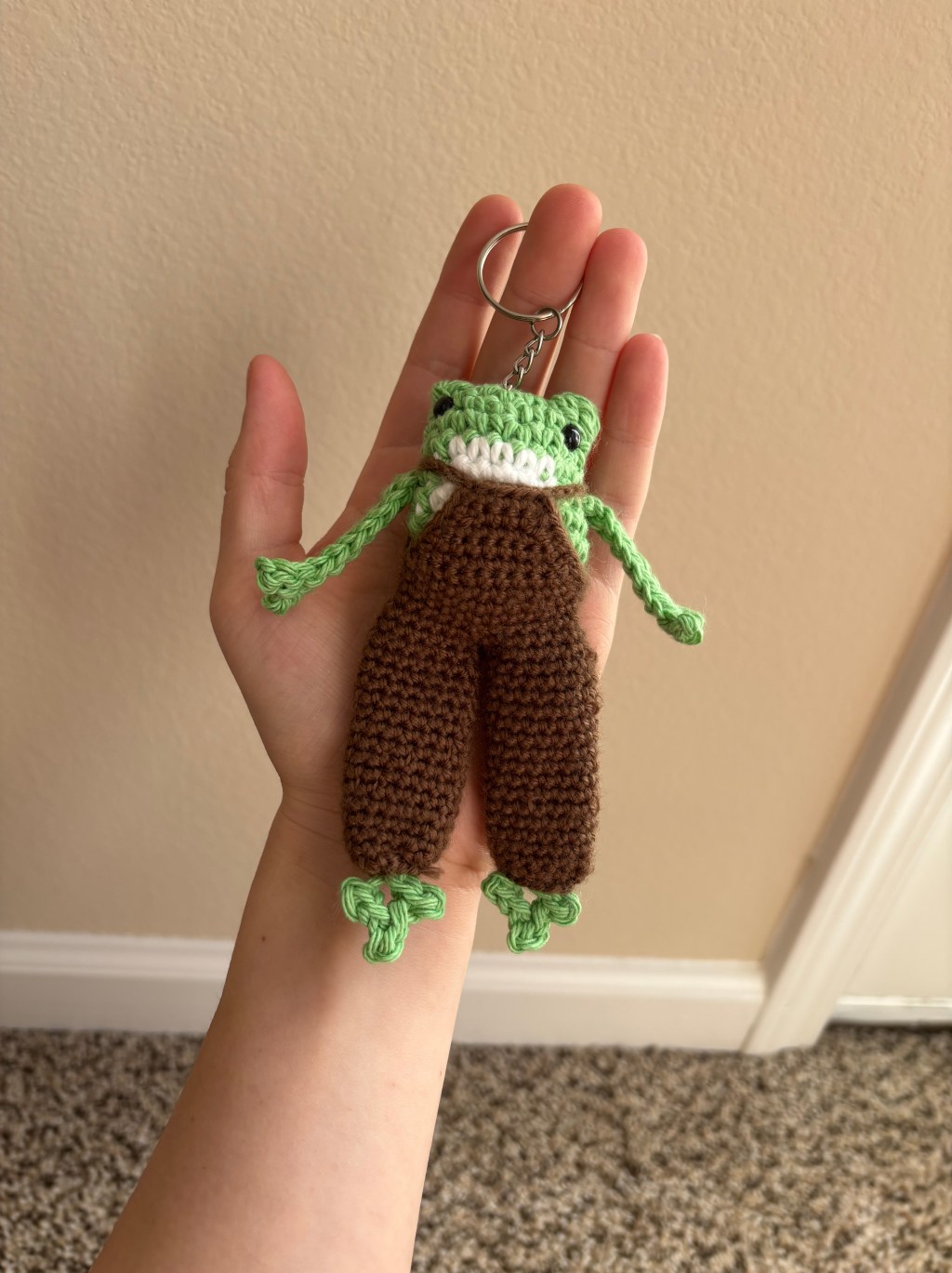
This week has been pretty slow, lots of waiting around. I’m not super thrilled about that, but I’m trying to make the best of it and enjoy the last bit of free time that I have. I picked up a project that’s taken me forever to finish (remember that doll I mentioned back in this doll pattern roundup post?) and actually made a lot of progress on it! Now I’m working on crocheting her a wardrobe, and while I was making a little jacket for her using a technique to give the stitches a different texture, I got inspired to make a beginner’s guide to the anatomy of a stitch and why working in different loops will give you different textures.
Have you ever read a pattern and seen terms like “FLO” or “BLO” or “work in back loop only”? Or maybe you’ve started working in rows and you aren’t sure where to place your hook to make your stitches.
No worries! In this post I’m going to break down these terms, explain how to apply them, and clarify any confusion around them.
In this tutorial you’ll learn how to work in both loops, back loop only, and front loop only, as well as identify each part of a crochet stitch.
Let’s get into it.
Understanding what makes up a stitch
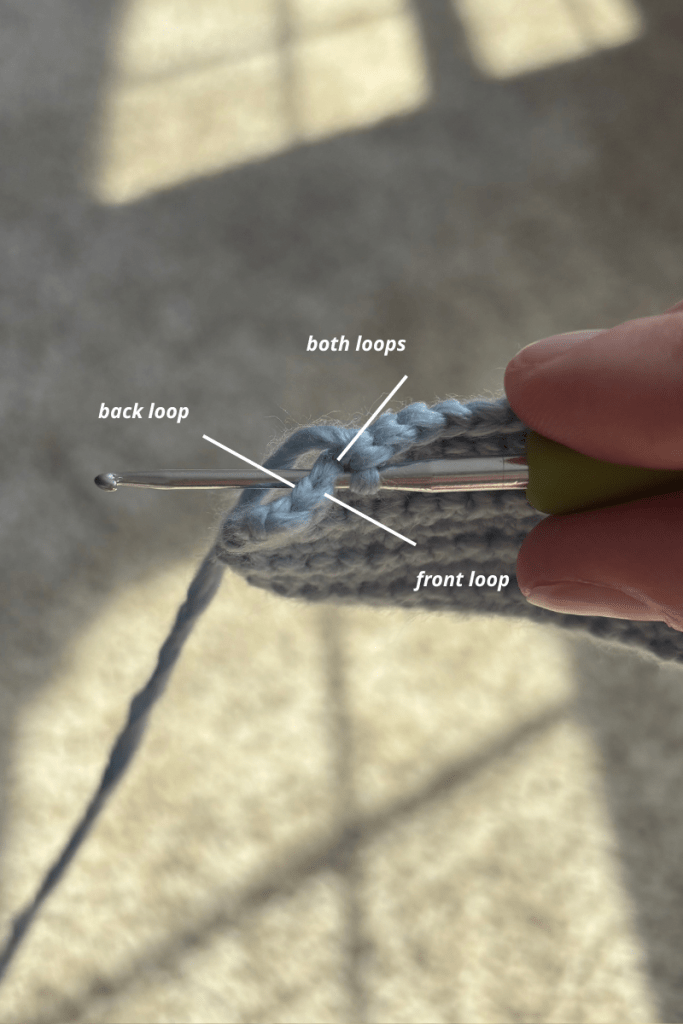
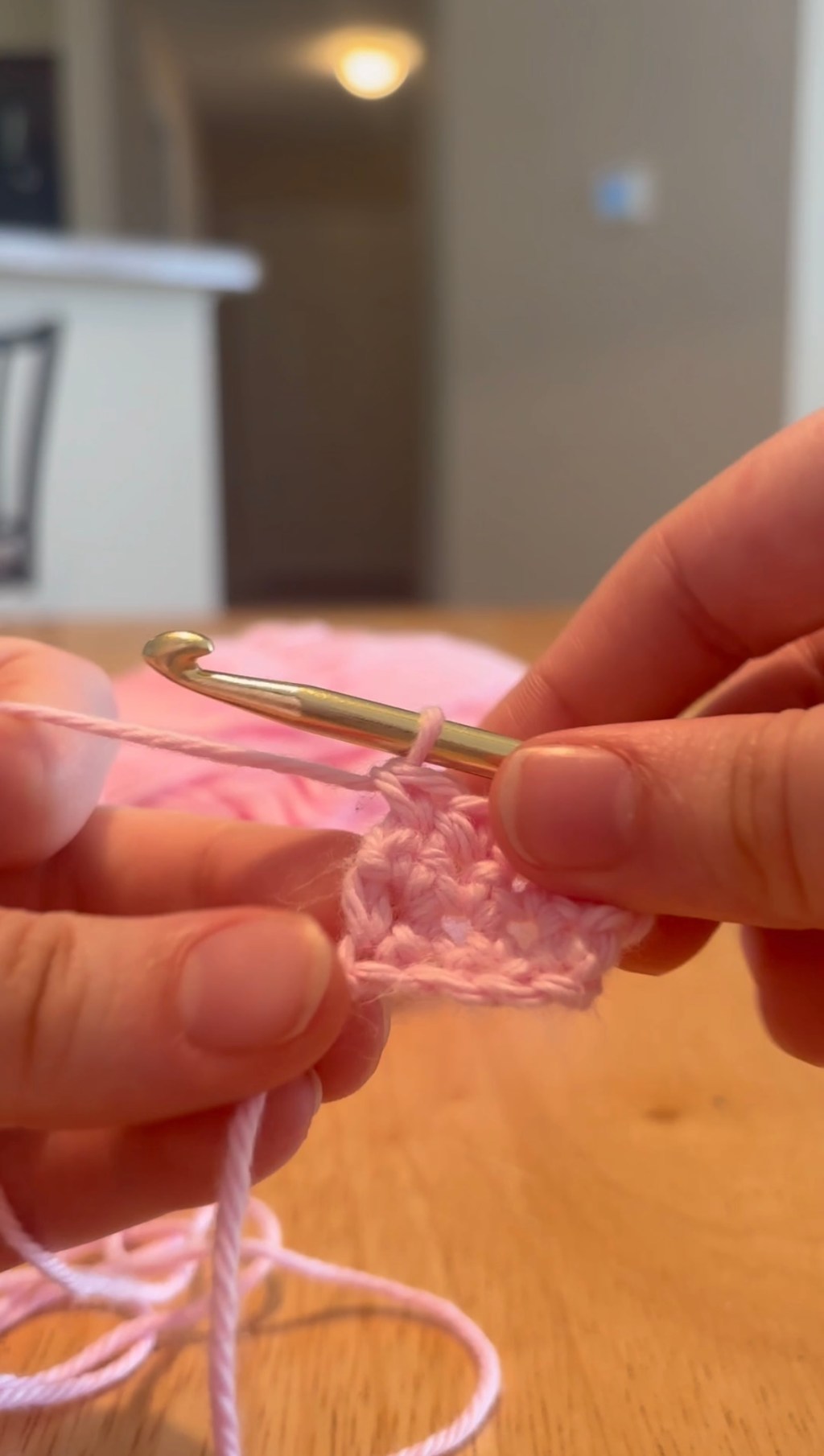
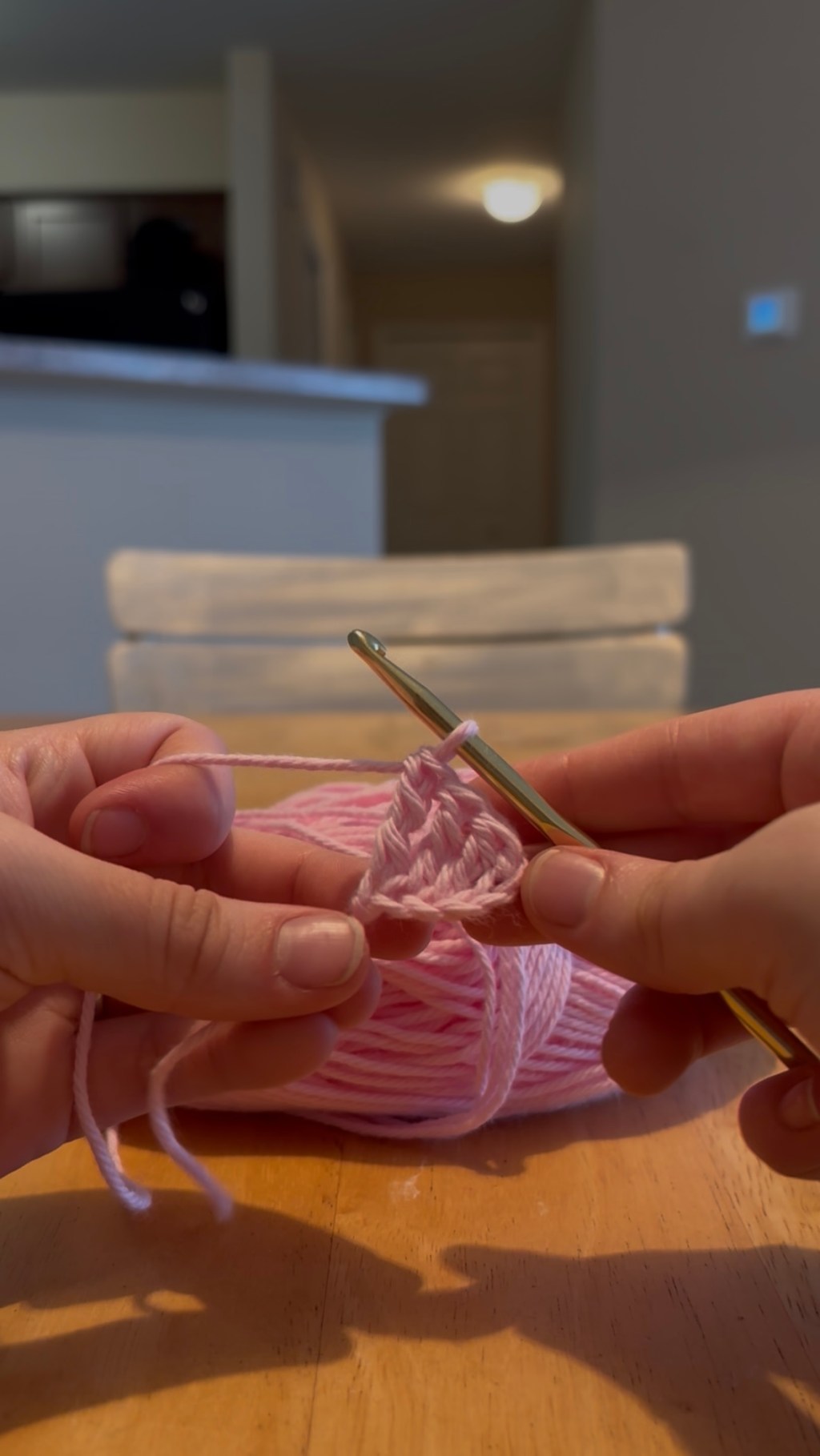
If you look closely, you’ll see that each crochet stitch has two top loops, like the single crochet for example.
You’re always going to work in these top loops, inserting your hook under both at the same time, unless your pattern states otherwise. The loop closest to you is called the front loop and the loop farthest from you is called the back loop. When you’re working in both at the same time, they’re referred to as both loops.
Why does it matter?
Working in different parts of the stitch will give your fabric a different texture.
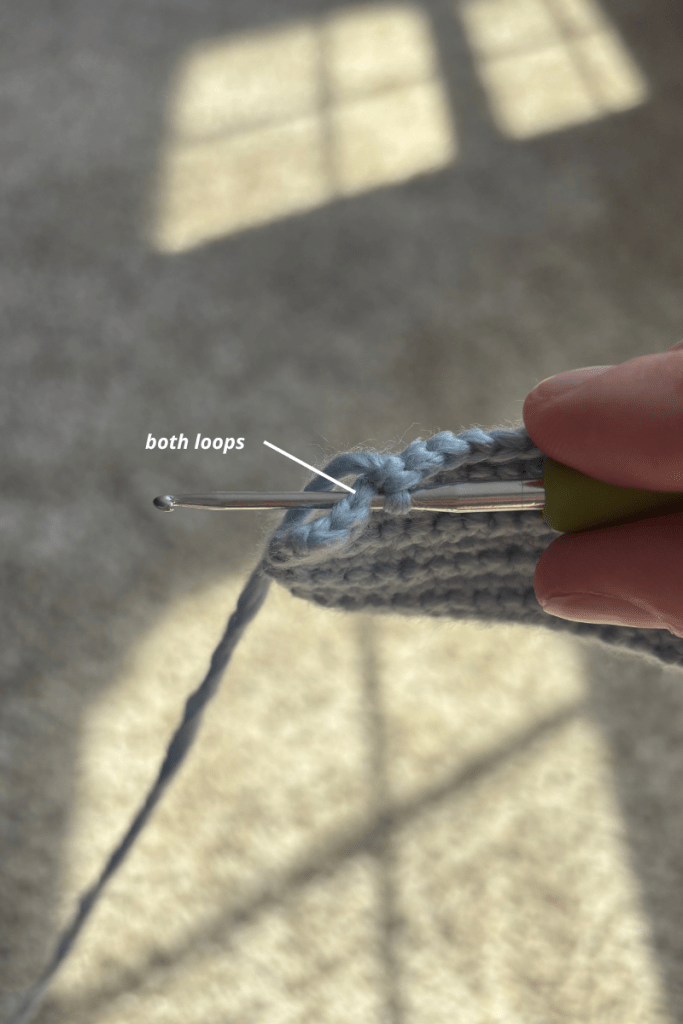
Working in both loops produces a neater, more dense fabric, especially with tight stitches like single crochet.
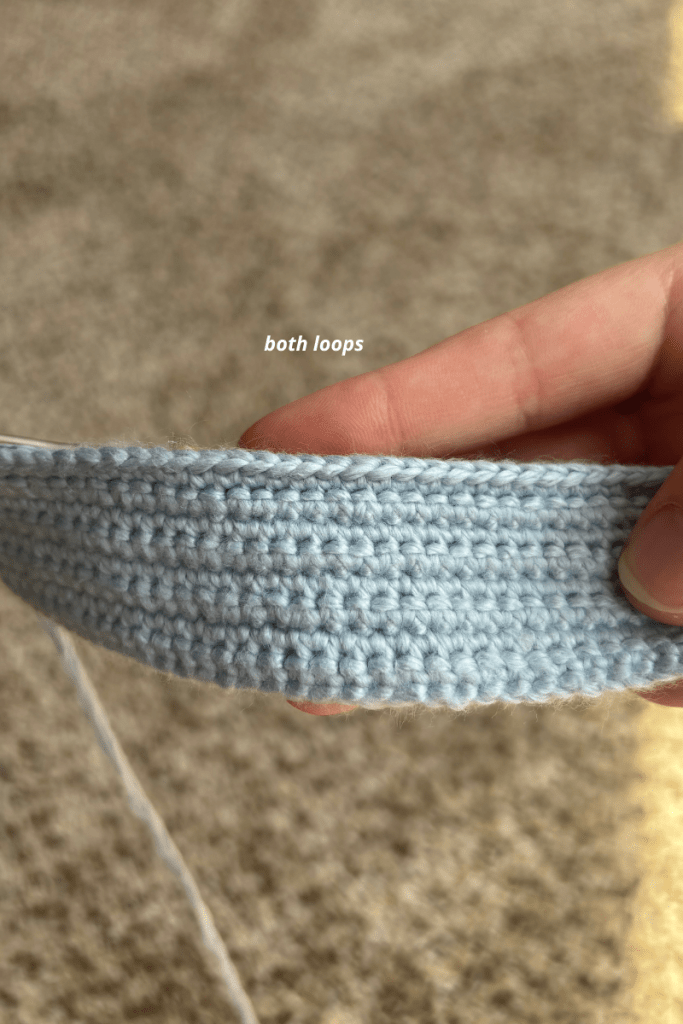
Notice how there are minimal gaps under or in between the stitches.
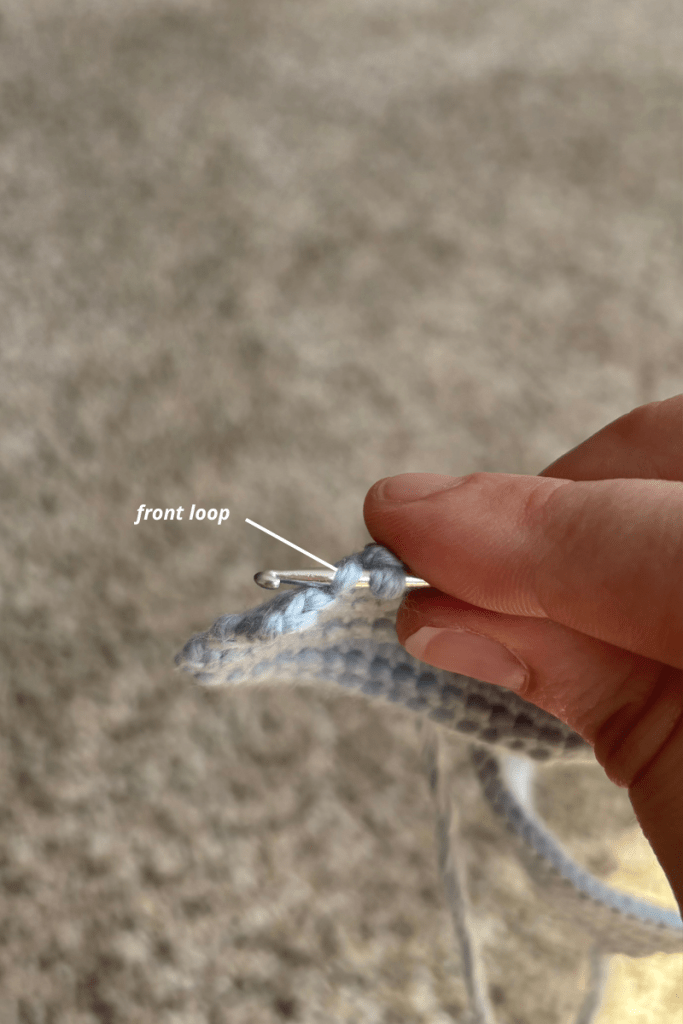
Working in the front loop only gives you a slightly looser, stretchier fabric and neat little lines on the wrong side of your work.
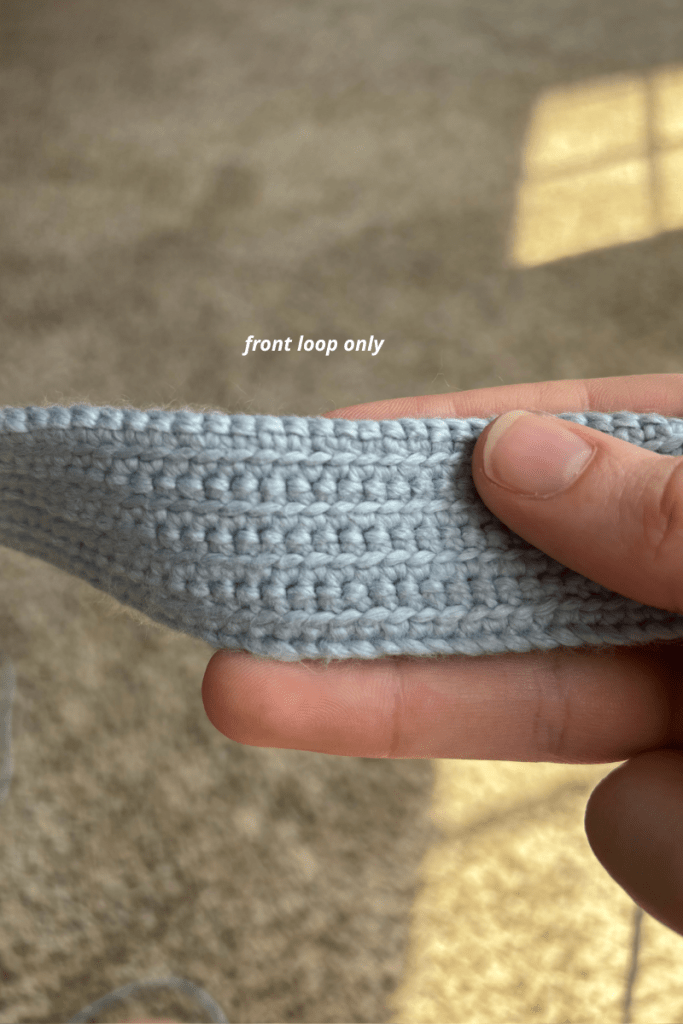
From the right side of your work, a row of stitches worked in the front loop will look like regular stitches worked in both loops, but from the wrong side of your work you’ll notice a little line across the row. (In this swatch I’ve worked alternating rows in both loops and in front loop only so that the lines only appear on one side of my work).
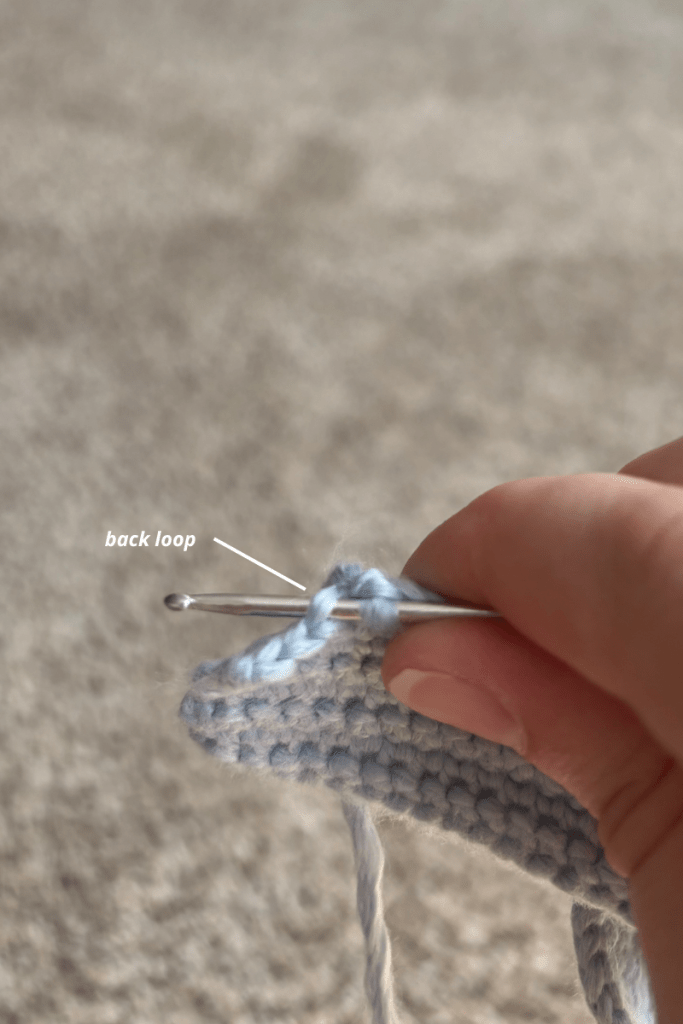
Working in the back loop only gives you the exact same texture as working in the front loop, only the lines will appear on the right side of that row and the wrong side will look just like regular stitches worked in both loops.
So if you want the lines to appear on the right side of your work, go with the back loop.
And if you want the lines to appear on the wrong side of your work, go with the front loop.
Some people use the front and back loops simply to add decoration or texture to their work, but they can actually be quite useful. You can actually finish working a piece then continue adding onto a section of it by crocheting into the unused front or back loops of a previous row. Here is a great tutorial on attaching yarn to unused loops on a previous row.
Or you can use the back loops to join granny squares or other motifs together, like in this tutorial.
Understanding these terms in a pattern
Now that you can recognize each part of a crochet stitch and what its purpose is, let’s talk about how they apply in most patterns!
Most patterns use the following abbreviations:
BLO: Back loop only (work only in the back loop until otherwise specified)
FLO: Front loop only (work only in the front loop until otherwise specified)
If the pattern doesn’t state to work in the back or front loop then you will always work in both loops.
I hope this tutorial was helpful!! Let me know in the comments if you get stuck or have any questions.



Leave a comment